
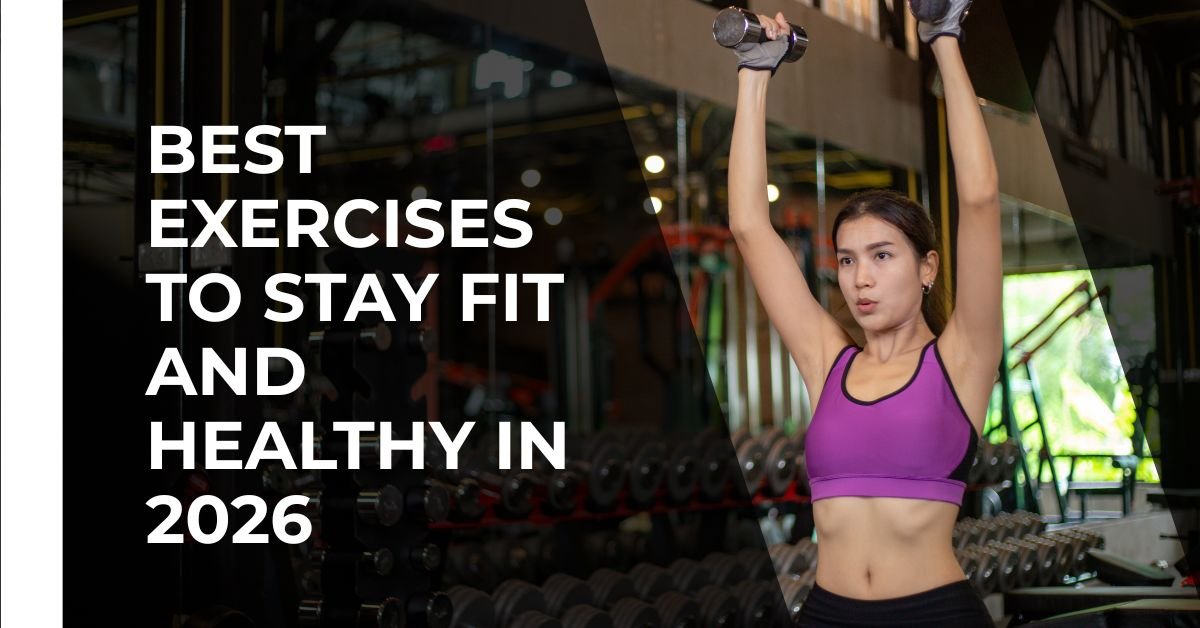
Staying physically active is one of the best ways to support overall fitness, strength, mobility, energy, and general well-being. You don’t need an expensive gym membership or complicated equipment to get started. A simple routine that includes cardio, strength training, stretching, and regular movement can work well for many people.
1. Walking
Walking is one of the easiest exercises to include in your daily routine. It requires little equipment and can be done almost anywhere.
A brisk walk can be added to your morning routine, lunch break, or evening schedule. As your fitness improves, you can gradually increase your walking time or pace.
Benefits:
- Supports cardiovascular fitness
- Helps increase daily activity
- Easy for beginners
- Requires minimal equipment
2. Squats
Squats are a popular bodyweight exercise that works several muscles in the lower body. They can be performed at home without equipment.
Focus on controlled movement and proper technique rather than simply trying to complete a large number of repetitions.
Benefits:
- Strengthens the legs
- Works the glutes
- Improves lower-body strength
- Easy to add to home workouts
3. Push-Ups
Push-ups are a classic bodyweight exercise that works the chest, shoulders, arms, and core.
Beginners can start with wall push-ups or knee push-ups and gradually progress toward standard push-ups.
Benefits:
- Builds upper-body strength
- Works multiple muscle groups
- Requires no equipment
- Easy to modify
4. Lunges
Lunges are useful for developing lower-body strength, balance, and coordination. You can perform forward, reverse, or stationary lunges.
Start slowly and focus on maintaining good form throughout each repetition.
Benefits:
- Strengthens the legs
- Works the glutes
- Supports balance
- Can be performed almost anywhere
5. Planks
Planks are commonly used to strengthen the core. The exercise involves holding a stable position rather than performing repeated movements.
Beginners can start with short holds and gradually increase the duration.
Benefits:
- Strengthens the core
- Improves body control
- Requires no equipment
- Easy to include in home workouts
6. Cycling
Cycling is an enjoyable cardiovascular exercise that also works the lower body. You can cycle outdoors or use an indoor stationary bike.
Adjust the speed and resistance according to your fitness level.
Benefits:
- Supports cardiovascular fitness
- Builds leg endurance
- Can be done indoors or outdoors
- Provides variety in a workout routine
7. Running and Jogging
Running and jogging are popular forms of cardio that can help improve endurance. If you’re new to running, start gradually with short periods of jogging mixed with walking.
Comfortable footwear and gradual progression can make the activity easier to maintain.
Benefits:
- Builds endurance
- Supports cardiovascular fitness
- Can be done outdoors
- Requires minimal equipment
8. Strength Training
Strength training can include bodyweight exercises, resistance bands, dumbbells, or gym equipment. It helps develop muscular strength and can make everyday physical activities easier.
A balanced routine can include exercises for the legs, upper body, back, and core.
Benefits:
- Builds muscular strength
- Supports healthy movement
- Improves physical performance
- Can be adapted to different fitness levels
9. Stretching and Mobility Exercises
Stretching and mobility exercises can be useful additions to a fitness routine. Gentle movements can help you maintain comfortable movement and prepare your body for physical activity.
Consider including movements for the shoulders, hips, legs, and back.
Avoid forcing stretches or bouncing aggressively. Move slowly and stay within a comfortable range.
10. Yoga
Yoga combines physical movement, flexibility, balance, and controlled breathing. Different types of yoga range from gentle sessions to more physically demanding practices.
Yoga can be a good option for people who want to combine movement with relaxation.
Benefits:
- Supports flexibility
- Improves balance
- Encourages body awareness
- Can provide a relaxing form of exercise
11. Jumping Jacks
Jumping jacks are a simple cardio exercise that can be performed almost anywhere. They can quickly increase your heart rate and work well as part of a home workout.
If jumping is uncomfortable, try a lower-impact version by stepping one foot out at a time.
12. Swimming
Swimming provides a full-body workout while placing relatively low impact on the joints because the water supports much of the body.
If you have access to a pool, swimming can be an enjoyable way to add variety to your exercise schedule.
How to Create a Simple Exercise Routine
You don’t need to exercise for hours every day. Start with manageable sessions and gradually build your routine.
A simple weekly plan could include:
- Walking or cardio: Several days per week
- Strength training: 2 or more days per week
- Stretching or mobility: Regularly throughout the week
- Rest and recovery: As needed
For general health, the World Health Organization recommends adults get at least 150 minutes of moderate-intensity physical activity per week, or an equivalent amount of vigorous activity, plus muscle-strengthening activities on 2 or more days per week.
Tips for Staying Consistent
Start Slowly
If you’re currently inactive, begin with short workouts and gradually increase your activity.
Choose Activities You Enjoy
You’re more likely to stay consistent when you enjoy your chosen exercises.
Set Realistic Goals
Instead of focusing only on long-term goals, set smaller weekly targets that are easier to achieve.
Stay Hydrated
Drink enough fluids, particularly during longer workouts and hot weather.
Prioritize Recovery
Rest is an important part of a sustainable exercise routine. Give your body time to recover when necessary.
Exercise Safety Tips
Increase exercise intensity gradually and focus on proper technique. If you experience severe pain, dizziness, fainting, chest pain, or unusual shortness of breath during exercise, stop and seek appropriate medical attention.
If you have an existing health condition or are unsure which exercises are appropriate for you, consider speaking with a qualified healthcare professional before starting a new exercise program.
Conclusion
The best exercise routine is one that you can perform safely, enjoy, and maintain consistently. Walking, squats, push-ups, lunges, cycling, running, strength training, yoga, swimming, and mobility exercises can all be part of an active lifestyle.
Leave a Reply