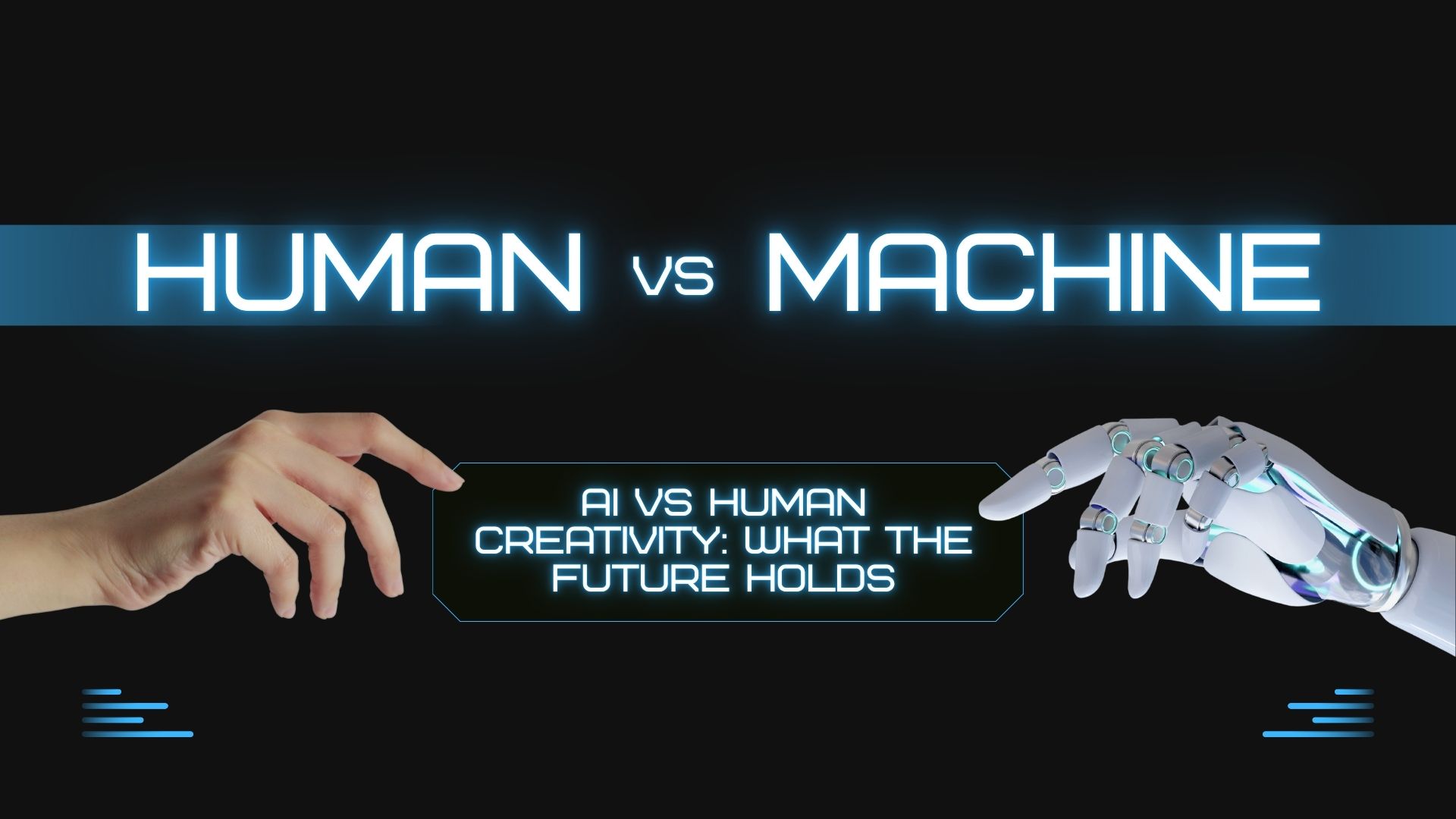
Artificial Intelligence (AI) has transformed the way people create content, design products, compose music, and solve problems. From generating artwork and writing articles to assisting with software development, AI is becoming a valuable creative partner. However, this rapid progress raises an important question: Can AI truly replace human creativity, or will it simply enhance it?
The answer is more complex than a simple yes or no. While AI can analyze massive datasets and generate impressive outputs within seconds, human creativity remains deeply connected to emotions, life experiences, imagination, and cultural understanding.
In this article, we’ll explore the strengths and weaknesses of both AI and human creativity and examine what the future may look like.
What Is Artificial Intelligence?
Artificial Intelligence refers to computer systems that can perform tasks traditionally requiring human intelligence. These tasks include:
- Writing articles
- Creating digital artwork
- Composing music
- Generating videos
- Solving complex problems
- Translating languages
- Coding software
- Data analysis
Modern AI learns from enormous datasets to recognize patterns and generate new content based on existing information.
What Is Human Creativity?
Human creativity is the ability to produce original ideas by combining imagination, emotions, intuition, and personal experiences.
Creative thinking allows people to:
- Invent new technologies
- Paint masterpieces
- Write novels
- Design buildings
- Compose emotional music
- Solve unique problems
- Build innovative businesses
Unlike AI, humans create because of passion, curiosity, memories, and emotions.
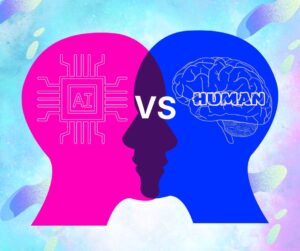
AI vs Human Creativity
| Feature | Artificial Intelligence | Human Creativity |
|---|---|---|
| Speed | Extremely fast | Slower |
| Original Thinking | Based on learned patterns | Based on imagination |
| Emotion | No real emotions | Deep emotional understanding |
| Innovation | Limited by training data | Unlimited possibilities |
| Learning | Learns from data | Learns from life experiences |
| Problem Solving | Excellent with structured tasks | Better at complex and emotional challenges |
| Adaptability | Needs training | Naturally adaptable |
Strengths of AI
1. Incredible Speed
AI can generate articles, images, presentations, and code in seconds.
Tasks that once required hours can now be completed almost instantly.
2. Handles Massive Data
AI can process millions of documents faster than any human.
This makes it valuable for:
- Medical research
- Business analytics
- Scientific discoveries
- Financial forecasting
3. Boosts Productivity
AI automates repetitive work like:
- Email writing
- Image editing
- Customer support
- Data entry
- Coding assistance
This allows professionals to focus on more strategic and creative work.
4. Creative Assistance
AI helps creators by:
- Suggesting ideas
- Generating drafts
- Removing backgrounds from images
- Creating logos
- Producing music samples
- Editing videos
Instead of replacing creativity, AI often speeds up the creative process.
Strengths of Human Creativity
Emotional Intelligence
Humans understand:
- Love
- Fear
- Happiness
- Hope
- Loss
- Humor
These emotions are essential for meaningful storytelling and authentic art.
Original Ideas
Humans imagine things that have never existed before.
Many groundbreaking inventions began as bold ideas rather than patterns found in existing data.
Cultural Understanding
Artists understand traditions, social values, and cultural nuances that influence creative work.
This helps create content that resonates with diverse audiences.
Ethical Decision-Making
Humans consider ethics, empathy, and long-term consequences.
AI can generate outputs but cannot independently determine what is morally right or wrong.
Can AI Replace Artists?
The short answer is no—not entirely.
AI can create impressive paintings, music, videos, and articles.
However, people still value creations because they reflect human experiences and emotions.
For example:
- A painting created after personal loss carries emotional depth.
- A novel inspired by real-life struggles connects deeply with readers.
- A song written from genuine experience often resonates more than one generated solely by algorithms.
AI can imitate styles but does not possess lived experiences.
Industries Being Changed by AI
Marketing
AI helps create:
- Advertisements
- Blog drafts
- Social media captions
- Email campaigns
- Product descriptions
Design
Designers use AI for:
- Logo concepts
- Image generation
- UI mockups
- Color suggestions
Human designers still refine ideas and ensure they align with brand identity.
Music
AI assists musicians by:
- Creating melodies
- Suggesting harmonies
- Improving audio quality
Musicians provide the emotional direction and artistic vision.
Film Production
AI supports:
- Video editing
- Visual effects
- Script analysis
- Voice enhancement
Directors and writers remain responsible for storytelling and creative decisions.
Challenges of AI Creativity
AI also has limitations.
Lack of True Understanding
AI predicts patterns but does not truly understand meaning or emotion.
Risk of Bias
If training data contains biases, AI-generated content can reflect them.
Copyright Concerns
Questions remain about ownership and fair use when AI is trained on existing creative works.
Hallucinations
AI may confidently generate inaccurate or fabricated information, so human review is essential.
The Future: Collaboration Instead of Competition
The future is likely to involve AI and humans working together rather than competing.
AI can handle repetitive tasks, generate ideas, and accelerate workflows, while humans contribute creativity, judgment, empathy, and originality.
Examples include:
- Writers using AI for brainstorming while crafting the final narrative.
- Designers generating concepts with AI and refining them into unique products.
- Developers using AI to write routine code while focusing on architecture and innovation.
- Businesses combining AI insights with human expertise to make strategic decisions.
This partnership can lead to greater productivity and more innovative outcomes.
Tips for Using AI Responsibly
- Use AI as a creative assistant, not a replacement for critical thinking.
- Verify facts from reliable sources before publishing.
- Add your own insights and experiences to make content unique.
- Respect copyright and intellectual property.
- Be transparent when AI has played a significant role in creating content.
- Continue developing your own creative and problem-solving skills.
Frequently Asked Questions (FAQs)
1. Can AI replace human creativity?
AI can support creative work and generate content, but it cannot fully replace human imagination, emotions, or lived experiences.
2. Is AI-generated art considered original?
AI-generated art is created from patterns learned during training. While the output may appear novel, questions about originality and copyright are still evolving.
3. Which jobs are most affected by AI?
Roles involving repetitive digital tasks, such as data entry, basic content generation, and routine coding, are seeing the greatest impact. Many creative and strategic roles are being augmented rather than replaced.
4. Will AI make creative professionals obsolete?
Most experts expect AI to become a tool that enhances creativity, allowing professionals to work faster and explore new ideas rather than eliminating the need for human creators.
5. How can I use AI to improve my creative work?
Use AI for brainstorming, outlining, editing, image generation, coding assistance, and research support, while adding your own expertise, style, and critical judgment.
Conclusion
Artificial intelligence is reshaping the creative landscape by making content creation faster, more accessible, and more efficient. Yet creativity is more than generating outputs—it is rooted in emotion, curiosity, culture, and lived experience. While AI excels at processing information and producing ideas at scale, humans remain unmatched in originality, empathy, and meaningful storytelling.
The future is unlikely to be a contest between AI and human creativity. Instead, the greatest innovations will come from people who learn to combine the speed and capabilities of AI with uniquely human imagination and insight. Those who embrace AI as a collaborative tool while continuing to develop their own creative skills will be best positioned to thrive in the years ahead.